

I am addicted.
I know from the way I reach for my phone first thing in the morning and fire up Instagram to give me that little hit of dopamine to go with my coffee (I practically can’t wake up without either anymore). I know from the frequency with which I return throughout the day to the app, which offers an endless stream of images and short videos tailored to my interests while subtly directing those interests through its predictive algorithm: According to Insta’s own summary, “Lately you’ve been into strength training, collegiate wrestling matches, and meditation practices,” which politely leaves out my major interest in thirst traps. (Is meditation a euphemism for something?) I know I’m an addict from the way I will almost certainly open Insta when I finish writing this paragraph, a small reward and excuse to procrastinate before the next. I use social media the same way Americans of a previous generation used cigarettes—an activity for one’s restless hands that gently alters one’s brain chemistry. It’s harmless fun, right?
Not according to the verdict in the recently concluded civil trial K.G.M. v. Meta et al., in which a jury found Meta (parent company of Facebook and Instagram) and Google (which own YouTube) liable for the plaintiff’s mental distress due to their deployment of addictive features like endless scroll and algorithmic recommendations. K.G.M. (the initials are meant to protect the plaintiff’s identity) is a 20-year-old Californian who began using social media at age 6 and claims its barrage of touched-up faces and AI-enhanced bodies contributed to her body dysmorphia and thoughts of self-harm. The jury agreed and awarded her a combined $6 million, half of which are punitive damages. Thousands of similar lawsuits are currently awaiting trial.
It’s obvious that K.G.M.’s attorneys are following the anti-tobacco playbook, which ultimately led to the Master Settlement Agreement with the four largest tobacco firms. In 1998 they agreed to stop marketing to minors and to commit at least $206 billion toward smoking-related medical expenses (rising Medicaid payments prompted many states’ attorneys general to join the fight). While social media addiction has not yet had a significant impact on state coffers, ambitious politicians are sharpening their knives. New Mexico Attorney General Raúl Torrez sued Meta in 2023 for misleading users about the safety of its platforms (this case was about the ease with which sexual predators can contact minors through its messaging systems) and last week a jury ordered Meta to pay the state $375 million in damages.

I can hear the libertarians howling: Why should a company be held liable when consumers willingly engaged with their product and consented to the terms and conditions? Doesn’t Section 230 shield platforms from liability stemming from the content created by third-party users? And isn’t this a slippery slope toward the nanny state, with the government protecting us from dangerous ideas that just so happen to undermine the state’s own power? For the most persuasive articulation of those arguments, I would direct you to this recent episode of the Reason Roundtable.
As a mouthy critic, I do worry about the erosion of our first amendment rights in the name of safety (I was recently disinvited from a new play by a writer who described my criticism as “violent,” which is perhaps the best pull-quote I’ve ever received). But I also recognize that never in human history has there existed a distribution system for content (a word that ludicrously compresses ideas ranging from commie fat acceptance to fascist looksmaxxing into so much twinkie filler) quite so instantaneous, targeted, and yes, addictive as social media. Did the lords of Silicon Valley really expect to introduce this new technology, which has colonized our free time altered the very way we move through the world, and not experience a backlash?
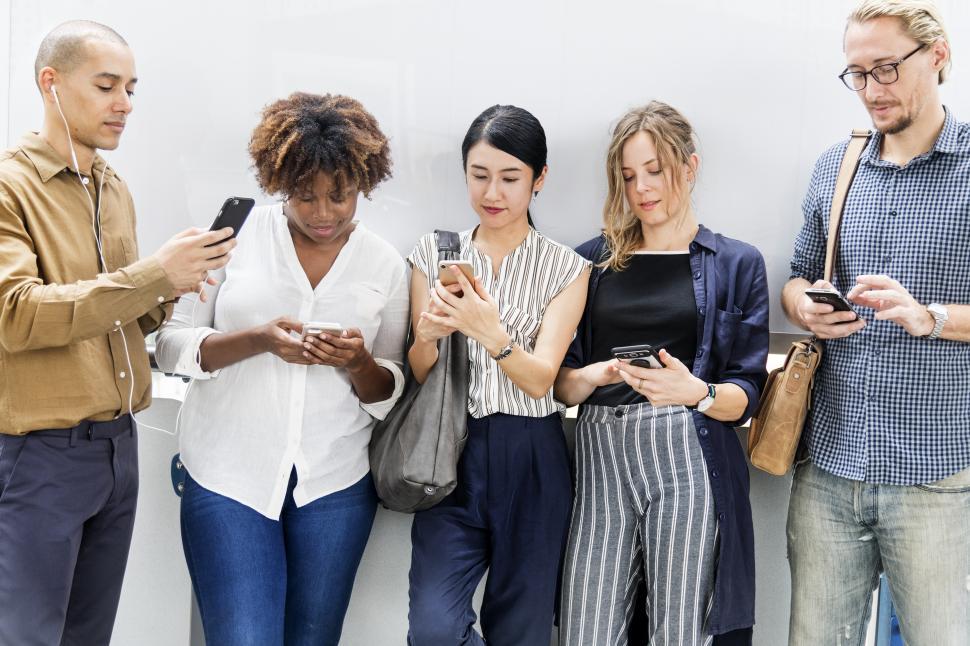
Culture is downstream of technology, and policy lags far behind both. While the courts have taken up the slack from our superannuated and mostly absent legislators when it comes to policy, I believe we could see a cultural shift around smartphones and social media before we reach a social media master settlement.
And here again tobacco provides an instructive historical blueprint: Yes, the MSA chastened tobacco firms and local policies (from both the government and private entities) banished smoking from aspects of American life. But smoking rates didn’t really decrease until there was a cultural shift around smoking—until it stopped being seen as sexy and started being seen as disgusting.
I love that the live theater is one of the few places in American life where there is a social taboo against smartphone use. Before most performances, theatergoers are encouraged not just to silence their cell phones, but to turn them off completely—to unhook from the machine and fully engage with what is happening in the room we are physically inhabiting. Yes, this prohibition reinforces the image of the theater as a fusty repository for the elderly (although as a critic who attends the theater most nights, I can confirm that older patrons are by far the worst offenders when it comes to ringing phones in the middle of performances, mostly because they don’t know how to use them). But I can also envision a future in which the theater becomes a model for other spaces as people seek refuge from the oppression of the ubiquitous screen.

Would you dine at a restaurant that had a policy against phones? Of course, you can have one on you, but if you wanted to look at it or take a call, you would have to go outside—the same as if you wanted to smoke a cigarette. What about a gym with the same policy? The atmosphere of bars would markedly improve if patrons were forced to engage with the real humans in the room rather than the illusions on the screen.
It may sound unenforceable and needlessly tyrannical, but I think our history with indoor tobacco use shows that it can be done—with minor pushback initially and then broad acceptance. I don’t think such policies even need to be codified in law. Entrepreneurs are welcome to set their own policies and people are welcome to congregate where they feel most comfortable. The market will decide.
It may be too soon for this. I suspect that, in 2026, customers would mostly avoid the phone-free venues. But the ones who didn’t might discover the pleasures of a few hours off the digital leash. They might even come back for more, making this precious offline time part of a weekly or even daily ritual. Ultimately, it’s up to us to make this change happen. It’s up to me to decide that I can start my day without doom scrolling, just as I did every morning before 2010.